from 0 review
16 NIGHTS / 17 DAYS
Specific Tour
16 people
___
The Thamsar Pass Trek is one of the most challenging and rewarding high-altitude treks in Himachal Pradesh, offering an unforgettable journey through the remote Ravi Valley of the Dhauladhar range. Connecting Holi village in Chamba with the isolated settlement of Bara Bhanghal, this trek is known for its dramatic landscapes, steep mountain terrain, ancient shepherd trails, and strong cultural connection with the Gaddi community.
Situated at an altitude of approximately 4,624 meters, Thamsar Pass is not just a trekking route but a traditional lifeline used by locals to travel between valleys. The trail crosses rugged cliffs, glacial streams, alpine meadows, and high mountain ridges, making it ideal for experienced trekkers seeking raw Himalayan wilderness.
Unlike popular trekking routes near Dharamshala, the Thamsar Pass Trek remains less commercialized and deeply authentic. It offers a rare opportunity to experience untouched Himalayan terrain where nature and culture coexist. Trekkers often walk along the same paths used by shepherds for centuries, gaining insight into the traditional lifestyle of the region.
The trek begins from Holi village, gradually ascending through lush forests and open pastures. As altitude increases, the terrain becomes more rugged, with narrow trails carved into mountain slopes. Numerous streams originating from the Bara Bhanghal range cross the path, eventually forming the mighty Ravi River.
The northern side of the Dhauladhar features more gradual slopes, allowing trekkers to maintain a steady pace despite the altitude. Natural rock shelters along the route provide resting points, often used by shepherds during seasonal migration. Upon crossing Thamsar Pass, the descent leads into the bowl-shaped valley of Bara Bhanghal, surrounded by towering snow-covered peaks and glacier-fed torrents.
Bara Bhanghal is one of the most remote villages in Himachal Pradesh, accessible only by high mountain passes. Despite being geographically part of the Chamba Valley, it is administratively connected to the Kangra district. Life here is shaped by extreme weather and isolation, and visiting the village offers a rare cultural experience.
Trekkers often interact with Gaddi shepherds, learning about their nomadic traditions, livestock rearing, and seasonal migration across passes like Thamsar, Makori, and Gairu Jot.
This trek requires excellent physical fitness, prior high-altitude trekking experience, and mental endurance due to long walking days and steep terrain.
The ideal season for the Thamsar Pass Trek is June to September, when the pass is accessible and snow conditions are manageable. Early summer may still have snow near the pass, while late monsoon offers greener landscapes but requires caution due to weather changes.
At Manu Adventures India, we specialize in remote Himalayan treks led by experienced local guides who understand the terrain, weather, and culture of the Dhauladhar range. Our focus is on safety, responsible trekking
Upon our arrival in Delhi, we will be greeted by our local guides and escorted to a hotel in Delhi to freshen up. This afternoon, there will be some free time to explore the vibrant city of Delhi before we transfer to the train station to board our sleeper train to Pathankot.
Upon arriving in Pathankot early in the morning, we will transfer by coach to Dalhousie. Once we reach Dalhousie, we will check into our hotel. In the evening, we will explore the local sights of this charming hill station.
After enjoying breakfast in Dalhousie, proceed to Kalatop Wildlife Sanctuary and then to Khajiyar. Take in the breathtaking beauty of Mini Switzerland and enjoy a delicious lunch. Following lunch, continue on to Bharmour via Chamba. Upon arrival in Bharmour, check into your hotel. In the evening, participate in the Aarti ceremony at Chaurasi Temples.
In the early morning, after enjoying breakfast and packing a lunch, embark on a trek to Bharmani Temple. The temple is located on a ridge and is a 3 km trek from Bharmour. In the evening, return to Bharmour and check into your hotel.
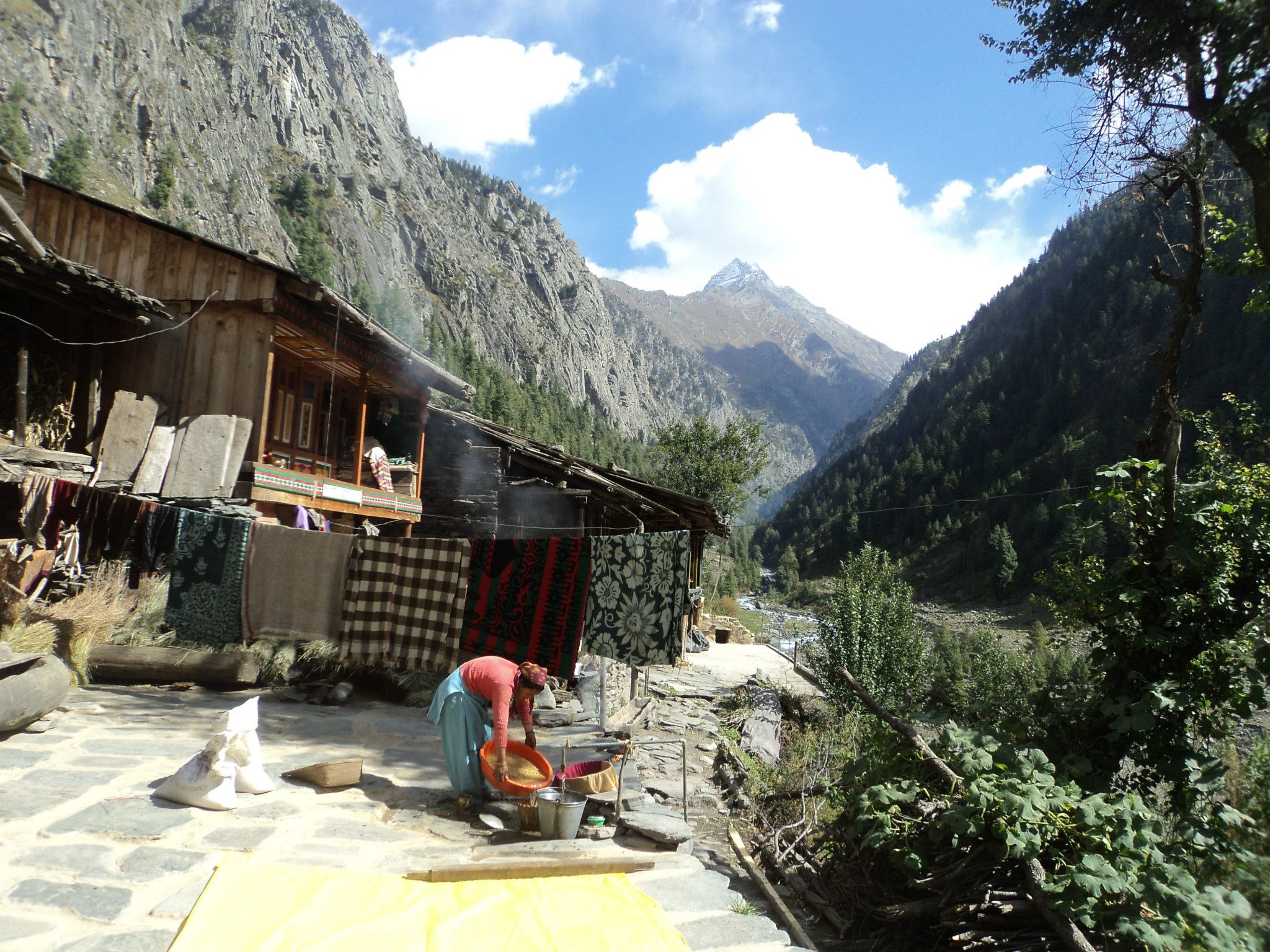
In the morning, after breakfast, the troop will travel to the quaint village of Holi by taxi, covering a distance of 38 km. Holi is a charming valley town nestled on the banks of the Ravi River, renowned for its delicious red, royal, and golden apples, as well as walnuts. The troop will pass through Kharamukh and Garola before taking a break at the picturesque Choli Bridge on the banks of the Ravi River for some relaxation and enjoyment. From there, the troop will continue their journey towards Holi. Upon arrival in Holi, the troop will explore the small bazaar of the village before heading to Nayagram and the Laakewali Mata temple, located three kilometers beyond Nayagram. Lunch will be provided at the temple, allowing for a moment of respite and nourishment. The remainder of the day will be dedicated to acclimatization, with the troop settling in for an overnight stay at the campsite.
The Laakewali Mata - Dharadi 10 km run is a fascinating journey that begins at Laakewali Mata, where the road ends. The troop will descend for 500 meters, cross a small suspension bridge, and then climb for one kilometer to reach the quaint village of Surie. After a brief stay in Surie, the troop will continue on to Urna village. Upon crossing a small Nallah near Urna, the trail leads to Khrudu via a ropeway. Khrudu serves as the meeting point for two paths - one through Bajol village and the other through which we have traveled. After a brief rest and lunch in Khrudu, the troop will proceed through Garonda Village. Crossing the Nala by a log bridge known locally as Trangdi, the path ascends steeply for one kilometer over a spur to reach the remote village of Dharadi. Dinner and overnight accommodations will be provided at the campsite.
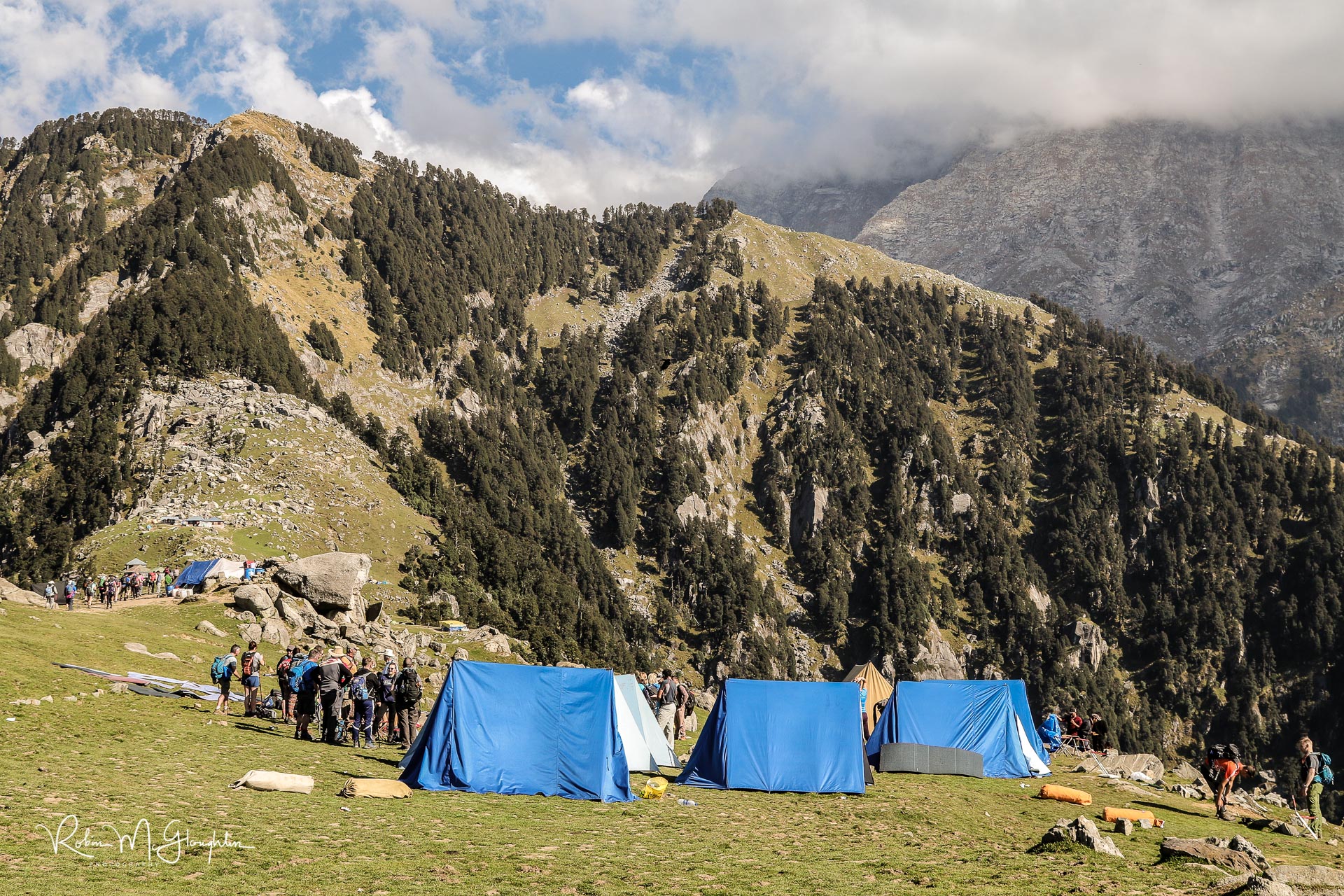
The journey from Dharadi to Lake Camp covers a distance of 14 kilometers. The trail leading eastward traverses steep rock faces high above the northern side of the Ravi River, presenting many challenging sections that require careful navigation. It is recommended to have a short rope on hand, as cliffs dominate this side of the river, while the southern side is densely covered with thick forest. After approximately 4 to 5 hours of trekking, hikers will arrive at the quaint hamlet of Khanar Village. Continuing on for another 2 to 3 kilometers, the path ascends sharply through wooded slopes until reaching the crest of a spur adorned with towering conifer trees. This spot serves as a traditional resting place for weary travelers. The trail becomes more defined as it descends through the trees, eventually leading to a serene lake surrounded by lush green slopes. This tranquil setting serves as an encampment for Gaddi shepherds, offering a peaceful respite after two days of challenging trekking through the rugged terrain. Although Bara Bhanghal is a mere 7 to 8 kilometers away, it is advisable to spend the night camping beside the lake to fully appreciate the beauty and tranquility of the surroundings.
Bara Bhanghal is the most remote area in Kangra District, offering a unique and challenging trekking experience. The journey to Bar Bhanghal begins with a 10km trek from the lake Base Camp, where the path ascends through picturesque grassy meadows. As you continue northeast along the Ravi River, you will enjoy a relatively level walk until Bara Bhanghal comes into view after 8km. The old village is perched slightly above the river, while the newer village can be seen on the right bank. Bara Bhanghal is a small valley nestled at the base of three towering mountain ranges, with glacier torrents converging near the village to form the Ravi River. The area is crisscrossed with shepherd trails leading in various directions. For the adventurous, there are several high mountain passes to explore, including the Nikora Pass (4745m) connecting Manimahesh North to Kugti in Budhil Valley, the Asha Gali Pass (5033m), and the Laluni Pass (5438m) leading to Tandi in Lauhal Valley. Additionally, there are two passes that lead east to the Kullu Valley. For those looking to venture towards the Kangra Valley, the Dhauladhar range can be crossed via the Makori Pass (4605m), Gairu Jot (4664m), and Thamsar Pass (4624m). Comfortable camping options are available outside the new village along the banks of the Ravi River, providing a serene and picturesque setting for outdoor enthusiasts.
Enjoy a full day of rest in Bara Bhanghal, where you can explore the village and make the most of your day.
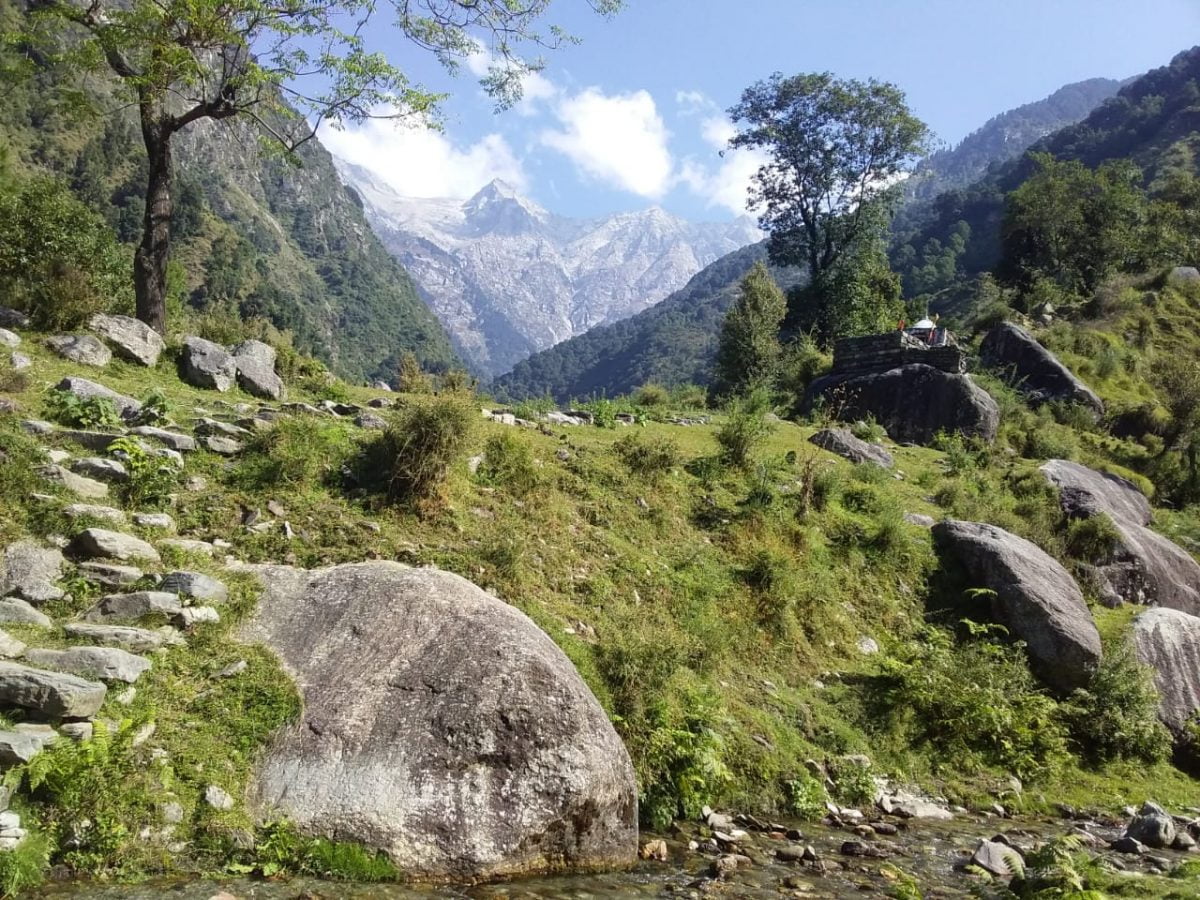
The trek from Bara Bhanghal to Marhu spans 9 kilometers. The journey begins early in the morning, following breakfast, as the troop crosses the river via a bridge located approximately 200 meters upstream. From there, the path turns southward, leading to the crossing of Thamsar Nala by means of a long bridge. The trail ascends steadily over rocky terrain along the left bank of the Nala, with slopes adorned by towering conifer trees. After covering a distance of 5 kilometers, the path once again crosses Thamsar, continuing its ascent through lush meadows and ahead. After another 2 kilometers, the path levels out, revealing nearby slopes blanketed in deep green grass and wild spinach, interspersed with rocks and boulders. Snow-capped slopes and a V-shaped glaciated valley provide a picturesque backdrop to the scene. In this serene setting, a few Gaddi shepherds can be found camping, making it an ideal spot for setting up camp.
The base on either side of any pass is referred to as Alyas, locally known as Lahesh. Marhu-Alyas of Thamsar Pass is located 7 kilometers away. This trek is filled with adventure and will take approximately 5-6 hours to navigate through rocky terrain and snow-covered slopes. Due to the long distance to the pass and the steep ascent, it is recommended to camp closer to the pass. A traditional campsite can be found about 8 kilometers from Marhu, where a large rock shelter is located. Until late June, the area surrounding this site is covered in snow, but after the monsoon season, between mid-August and early October, the snow begins to melt while the higher glaciers remain frozen.
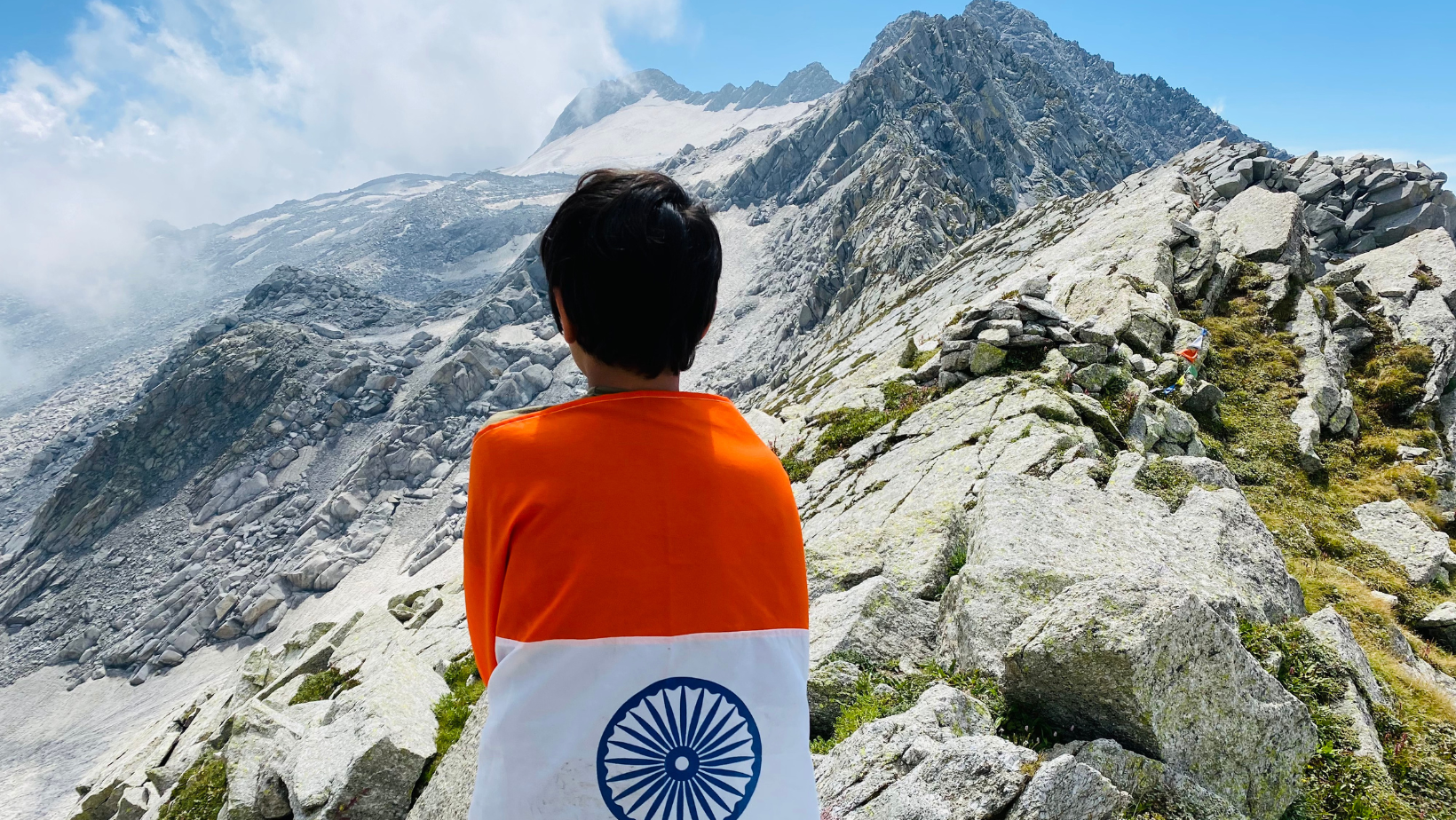
The Alyas Base Camp to Panarthu Pass trek is highly dependent on the weather conditions and the physical condition of the trekker. Typically, a Traveling Guide will not take any risks or allow crossing the passes in unfavorable weather conditions, opting instead to wait for the sky to clear. If the sun is shining, the trek will begin early in the morning, around 5:00 am, after a light breakfast and with packed lunch in tow. This early start ensures that the snow is frozen, making for easier walking. It is crucial to cross the pass before 12:00 - 1:00 pm to avoid potential problems such as heavy snow winds, rainfall, or even snowfall. The trek from Alyas to Thamsar Pass – Panarthu covers a distance of 20 kilometers, with roughly 10 kilometers to the top of the Pass-Panarthu. The path initially descends onto the glacier before gradually ascending. Walking on frozen snow in the early morning on a well-trodden trail makes for smoother progress. As the trek gains height over snow slopes, the ascent between two parallel ridges becomes more challenging, eventually leading to an upper glacier. Along the way, trekkers will pass a glacial lake about 3 kilometers from the campsite. Progress may become difficult in poor snow conditions higher up, with large rocks and boulders scattered at the top of the pass. A cairn adorned with various trinkets symbolizes the goddess of Thamsar Jot, while the peaks of Lantern (5067m) and Thamsar (5078m) can be admired on either side of the pass. The descent on the South side is steeper than the North, leading down on soft snow before crossing a glacier to reach a ridge on the right. After descending steeply for about 3 kilometers, trekkers will arrive at Bharpal Got (4050m), a huge rock shelter where a halt can be
The Panarthu-Bir trek is a 28km long section, mostly descending in elevation. The path is well-defined for the first 16km, leading to Rajgundha, where a local bus can be taken to Beed. The trail from Panarthu follows the left side of the glaciated valley, with the glacier extending down for several kilometers. A pleasant walk through the narrow valley will bring you to Palachak in 8km, where you will find a forest rest house and an eating shop. The Uhl river originates from the glacier above Palachak. After crossing the river, the trail ascends to a ridge on the west side of the river, eventually reaching Rajgundha (2625m) in 8km, a sizable village. From here, you can either take the bus or continue walking the final 14km down to Beed. Beed, also known as Beed Khas, is famous for paragliding. Accommodations for the night will be provided at a camp in Bir.
In the early morning, the journey to Dharamshala will commence via taxi. The group will make a stop to visit the Shiva temple in Baijnath and the Chamunda Temple in Daad. After a 2-3 hour drive, we will arrive at Dharamshala, the final destination of our trek. Here, the group will enjoy a memorable lunch with Anna Adventures & Tours' outdoor team. Our team will bid farewell to the group with well wishes, hoping to welcome them back for more trekking adventures in the unexplored Himalayas.
We have a free morning to continue exploring the enchanting town. Consider visiting the Tibetan market or exploring one of the magnificent monasteries. In the afternoon, we will transfer back to Pathankot train station to catch the overnight sleeper train back to Delhi. Accommodation for the night will be on the train.
Upon our arrival in Delhi, we promptly board our awaiting bus for the transfer to Agra. After checking into our hotel, we embark on a visit to the iconic Taj Mahal. This architectural masterpiece, built by the Mughal Emperor Shah Jahan in loving memory of his wife, stands as a timeless symbol of undying love. A trip to India would not be complete without witnessing its grandeur. Our overnight stay will be at the hotel.
The document titled Thamsar Pass Trek provides a comprehensive guide to undertaking the Thamsar Pass Trek, offering detailed insights into the route, terrain, and essential preparations for this challenging expedition. It serves as a valuable resource for outdoor enthusiasts seeking to explore the beauty and adventure of the Thamsar Pass Trek. The document meticulously outlines the trekking itinerary, safety measures, and tips for a successful journey through the stunning landscapes of
We will be taking an early transfer back to Delhi to ensure we catch our flight back home. The tour and services will conclude at this point. Thank you for joining us on this journey.
Thamsar Pass is located in the Dhauladhar Range of Himachal Pradesh, connecting Holi (Chamba Valley) with Bara Bhanghal (Kangra Valley) in the remote Ravi River region.
Thamsar Pass is situated at an altitude of approximately 4,624 meters (15,170 feet) above sea level.
The Thamsar Pass Trek is classified as a difficult and challenging trek, suitable only for experienced trekkers with prior high-altitude trekking experience.
No, this trek is not recommended for beginners due to steep ascents, long trekking days, rocky terrain, and high altitude.
The best season to attempt the Thamsar Pass Trek is June to September, when the pass is accessible and weather conditions are relatively stable.
The complete Thamsar Pass Trek itinerary usually takes 15–17 days, including acclimatization, rest days, and travel.
Yes, trekking permits and camping permissions are required. These are arranged by the trek operator.
Accommodation includes hotels/guest houses in towns and camping in tents with mattresses during the trekking days.
Yes, porters or ponies can be arranged to carry luggage, usually with a weight limit per person.
The trek offers raw Himalayan wilderness, dramatic cliffs, glaciers, shepherd trails, and a rare cultural experience in Bara Bhanghal, one of the most remote villages in Himachal Pradesh.
0 review
0 review
0 review

Leave a review